European League Set Piece Data Reveals Betting Value Patterns
Written by Zoe Franke · Aug 5, 2026
European League Set Piece Data Reveals Betting Value Patterns
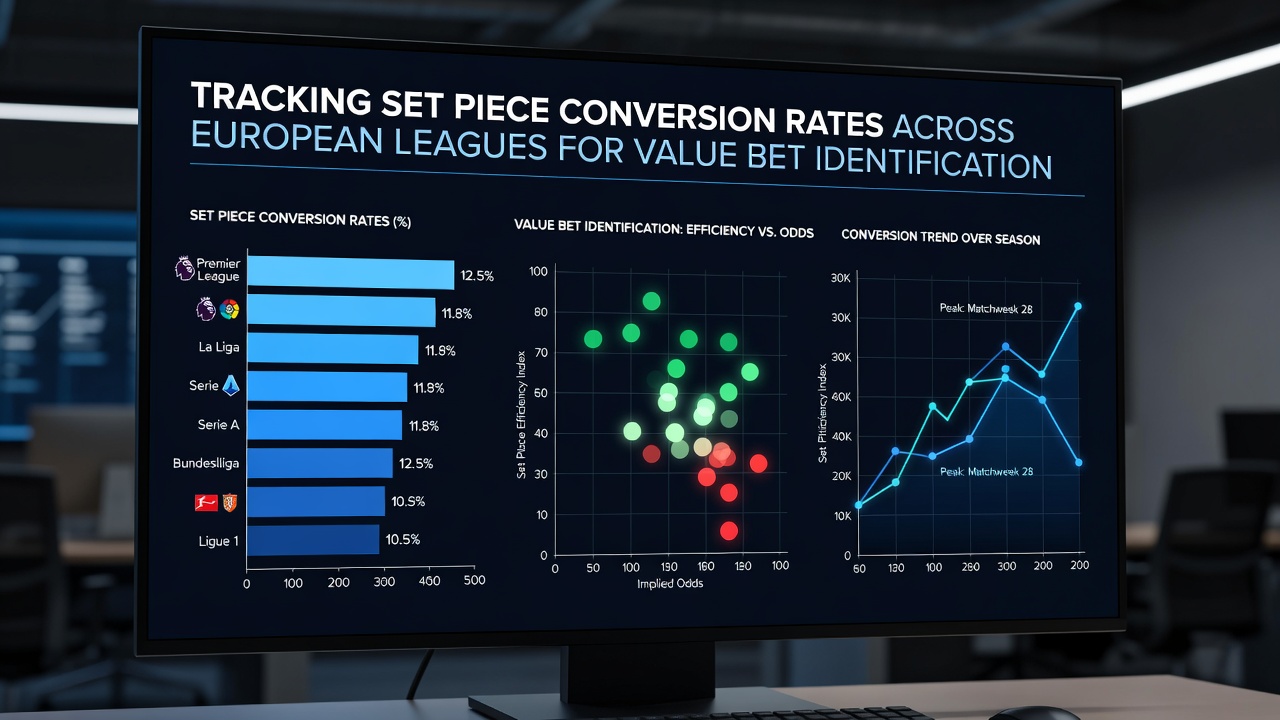
Analysts track set piece conversion rates by measuring goals scored from corners, free kicks, and throw-ins relative to the total opportunities created in each match, and these figures help identify discrepancies between actual performance and betting market odds. Data compiled across the Premier League, La Liga, Bundesliga, Serie A, and Ligue 1 shows consistent variation in how teams convert these situations, with some sides posting conversion rates above 12 percent while others remain below 7 percent over multiple seasons. Observers note that such differences persist even when teams face similar defensive structures, suggesting underlying tactical or personnel factors at play.
Measuring Conversion Metrics Across Leagues
Teams in the Bundesliga frequently generate more set piece attempts per game than their counterparts in Serie A, yet the German league's overall conversion rate hovers around 9.8 percent compared to 8.4 percent in Italy, according to aggregated match data from the 2024-25 campaign. Researchers adjust for variables including opponent quality and match context before comparing raw numbers, which allows patterns to emerge that raw totals might obscure. In August 2026, early season tracking for the new campaign already indicates that several promoted sides in Ligue 1 have elevated their set piece efficiency above league averages from the prior year, creating potential mismatches against established defenses.
Conversion rates break down further when separated by type, with direct free kicks producing lower success percentages than indirect routines involving multiple passes or decoy runs. Those who've studied this area find that teams employing specialized delivery specialists achieve higher returns on corners, particularly when targeting near-post flick-ons or far-post headers from tall forwards. European competitions also reveal that away sides convert set pieces at slightly lower rates than home teams across all five major leagues, though the gap narrows in high-stakes fixtures.
League-Specific Patterns and Trends
La Liga sides emphasize possession-oriented build-up even from restarts, which correlates with lower volume but higher quality chances when opportunities arise. Bundesliga matches, by contrast, feature more chaotic scrambles in the box that inflate both attempt counts and occasional conversion spikes. Serie A defenses organize tightly on set pieces, limiting clear chances yet occasionally conceding to well-rehearsed routines from teams like those that reached deep European runs in recent years. Ligue 1 data shows the widest variance between top and bottom clubs, with several mid-table sides outperforming expectations on set piece goals.
One study released by UEFA's technical department examined over 2,000 set pieces from the 2024-25 Champions League group stage and found that teams with dedicated set piece coaches converted 11.2 percent of their opportunities compared to 7.9 percent for squads without such specialists. The same report noted that throw-in routines contributed measurable goal tallies in certain leagues where long throws remain part of the attacking arsenal. Australian researchers publishing in a sports analytics journal also highlighted how weather and pitch conditions in northern European venues during winter months affect conversion percentages, with wet surfaces reducing accuracy on direct deliveries.
Applying Data to Value Bet Identification
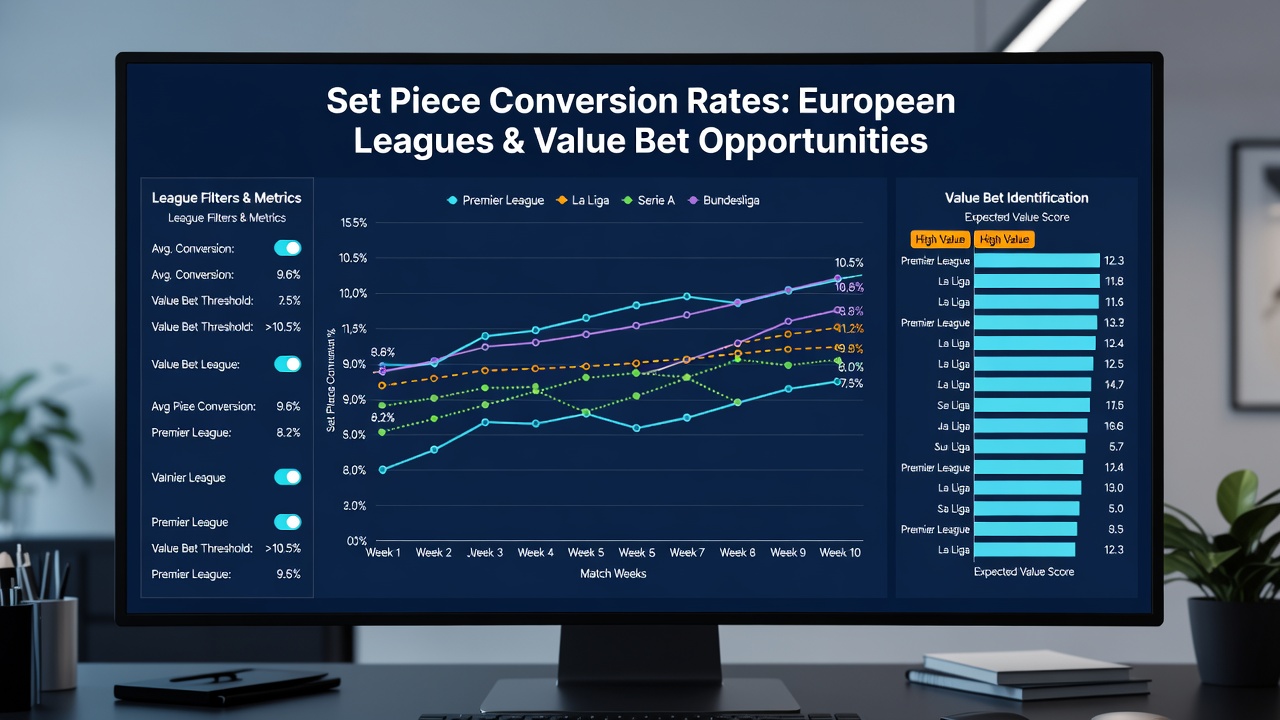
Betting markets sometimes undervalue set piece contributions when focusing primarily on open-play metrics, which creates opportunities where implied probabilities diverge from observed conversion rates. Bettors who monitor rolling averages over 10 to 15 match windows can spot teams whose set piece output exceeds or falls short of market expectations. In August 2026, pre-season friendlies already supplied initial indicators for several clubs that altered their set piece personnel during the summer transfer window, and these changes appear in early statistical models.
Cross-referencing conversion data with fixture schedules helps isolate matches where one side holds a clear edge in this area, particularly when facing opponents that struggle to defend restarts. Multi-goal correlations emerge in certain leagues where teams strong on set pieces also tend to keep clean sheets, allowing combined betting lines to reflect the dual strengths. Data providers release updated dashboards weekly during the season, enabling ongoing adjustments to models that previously relied on season-long aggregates.
Conclusion
Tracking set piece conversion rates supplies a measurable layer of analysis that complements broader performance statistics across European leagues. Consistent collection and contextual adjustment of these figures allow identification of situations where betting markets may not fully account for specialized efficiencies. As the 2026-27 season progresses, continued monitoring will show whether recent trends hold or shift with tactical adaptations and personnel changes.