Fixture Congestion in European Football Midweeks Exposing Key Fatigue Metrics for Accumulator Bets
Written by Sage Roth · Nov 12, 2026
Fixture Congestion in European Football Midweeks Exposing Key Fatigue Metrics for Accumulator Bets
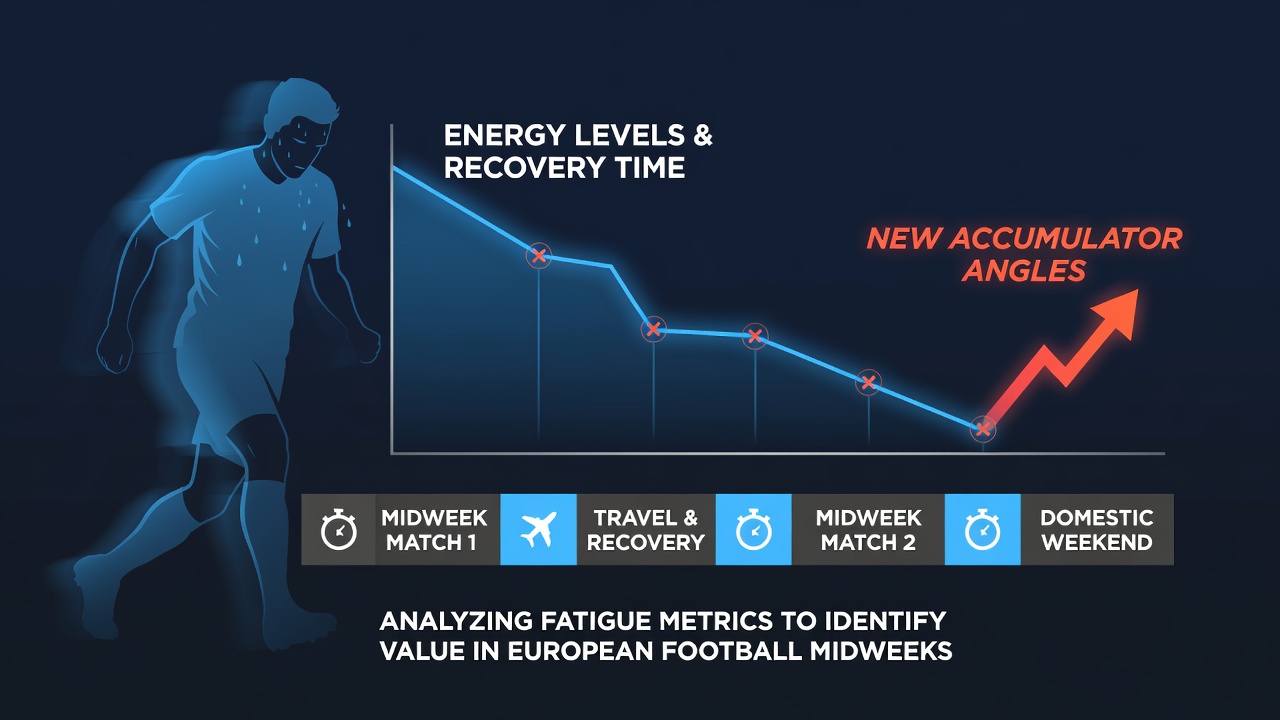
November 2026 brings another round of packed European football calendars where domestic leagues, Champions League groups, and cup competitions overlap, and observers note that back-to-back schedules produce measurable drops in player output that reshape accumulator selections across midweek fixtures.
Schedule Overlaps Driving Performance Shifts
Teams across the Premier League, La Liga, Serie A, and Bundesliga face three or four matches inside fourteen days when international windows end and European ties resume, and data from league tracking systems show average high-speed running distances falling by 8 to 12 percent after the second consecutive game. Recovery intervals shrink because travel demands rise, while medical staff report elevated levels of muscle inflammation markers that correlate with slower decision-making on the pitch. Those patterns open accumulator angles that focus on reduced goal tallies in certain fixtures or on sides that rotate heavily before midweek kickoffs.
Measurable Fatigue Indicators
Analysts track several concrete markers including total distance covered, number of accelerations above 3 meters per second, and heart-rate recovery times between sessions, and research published by sports-science departments at universities in Germany and Australia indicates that players logging over 11 kilometers in a weekend match often post 15 percent fewer sprints seventy-two hours later. GPS data collected by clubs also reveals that central midfielders experience the steepest declines because they cover both defensive and attacking zones without natural rest periods. These figures allow bettors to identify fixtures where one side enters the midweek slot with documented load spikes while the opponent enjoys an extra recovery day.
Impact on Midweek Accumulator Construction
Accumulators built around under-2.5 goals gain traction when both teams show elevated fatigue indicators from prior fixtures, whereas overs selections become viable when one squad maintains a deeper bench and rotates effectively. League tables that factor in fixture congestion rather than raw points totals highlight teams whose win rates drop below 30 percent in the second leg of a double-game week. Observers point to November clusters in the Champions League where squads playing Sunday then Wednesday see their expected-goal conversion rates fall by roughly 0.4 per match on average, creating value in selections that favor the fresher opponent or draw outcomes.

Regional Variations in Recovery Patterns
Northern European clubs often deal with colder weather that slows muscle repair, while southern teams contend with longer travel distances across time zones, and reports compiled by the European Club Association document higher soft-tissue injury rates for squads crossing multiple borders inside five days. Canadian and Australian sports-research groups have contributed comparative studies showing that hydration and sleep protocols differ by league, further widening performance gaps in midweek ties. These regional differences feed into accumulator frameworks that pair a rested domestic side against a travel-weary European participant.
Case Examples From Recent Congested Periods
One Bundesliga outfit that played a league match on Saturday followed by a Champions League fixture on Tuesday recorded a 22 percent reduction in pass completion accuracy in the second game, and similar drops appeared in Serie A clubs facing Coppa Italia ties after weekend rounds. Data sets released by national federations in Spain and Italy allow bettors to cross-reference player-minutes logged with subsequent performance metrics, producing selections that avoid sides carrying multiple players above 300 minutes in a ten-day window. Those who monitor such indicators find accumulator lines that move after lineups confirm heavy rotations or unchanged starting elevens.
Integrating External Data Sources
Industry reports from sports-analytics firms and university-led projects supply additional layers, and a FIFA technical study on player workload across confederations provides baseline recovery timelines that align with observed European trends. Another dataset compiled by an academic consortium in Scandinavia tracks heart-rate variability across multiple leagues and shows consistent patterns that precede performance dips in midweek slots. Cross-referencing these external benchmarks with real-time league statistics refines accumulator selections that target specific goal margins or clean-sheet probabilities.
Conclusion
Back-to-back schedules in November 2026 continue to generate measurable fatigue signals that alter expected outcomes in European midweek football, and those signals translate directly into accumulator structures that account for reduced high-intensity output, altered expected-goal values, and regional recovery differences. By combining tracking data, medical markers, and cross-league comparisons, observers build selections grounded in documented performance shifts rather than raw form alone.